
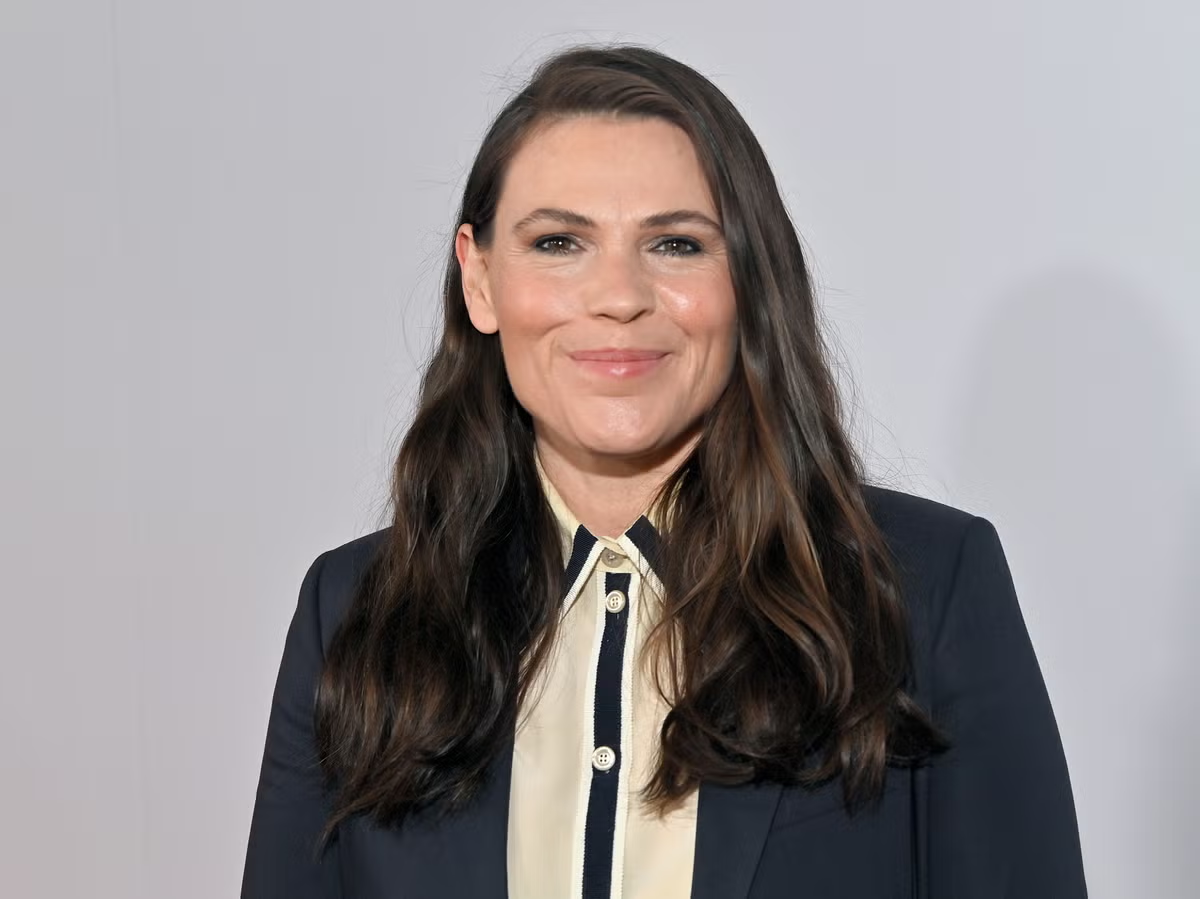
Clea DuVall has built a distinctive career in Hollywood by moving effortlessly between acting, writing, and directing. Known for her memorable performances in films and television series, DuVall has also established herself as a filmmaker with a thoughtful and personal creative voice.
From her early appearances in independent films to her work behind the camera, DuVall’s career reflects a willingness to take on complex characters and stories that explore identity, relationships, family, and belonging.
Early Life and Introduction to Acting
Clea DuVall was born on September 25, 1977, in Los Angeles, California. Growing up in Southern California, she developed an interest in acting at an early age and eventually pursued a career in the entertainment industry.
She began appearing professionally in the 1990s, taking roles in television and independent films. Her early work helped establish her as a recognizable character actor, particularly in projects aimed at younger audiences and independent-film viewers.
Rather than being associated with only one type of role, DuVall developed a reputation for playing characters with emotional complexity and distinctive personalities.
Breakthrough on the Big Screen
DuVall’s film career gained significant attention during the late 1990s and early 2000s. One of her notable early roles came in the 1999 supernatural thriller The Faculty, directed by Robert Rodriguez. The film featured a young ensemble cast and became a memorable entry in the era’s science-fiction and horror cinema.
She also appeared in the critically acclaimed independent film But I’m a Cheerleader (1999), a satirical romantic comedy that later developed a strong cult following. The film’s exploration of sexuality, conformity, and identity became an important part of its lasting appeal.
These projects demonstrated DuVall’s ability to work in both mainstream and independent productions while taking on characters that did not necessarily fit conventional Hollywood stereotypes.
Television Success
DuVall has also had an extensive television career. She appeared in popular series including Carnivàle, Heroes, and American Horror Story.
Her television work allowed her to explore a wide range of genres, from supernatural drama to science fiction and psychological horror. She became particularly recognizable to viewers through her ability to bring understated intensity to supporting and recurring roles.
Over the years, television also gave DuVall opportunities to work with prominent actors, directors, and writers while expanding her creative experience beyond feature films.
A Career Behind the Camera
While DuVall became known primarily as an actor, she eventually expanded her career into writing and directing.
Her first feature as a writer-director was The Intervention, released in 2016. The film is a character-driven comedy-drama centered on a group of friends whose relationships are tested during a shared getaway.
DuVall wrote and directed the film while also appearing in it. Its focus on friendship, romantic relationships, and personal conflict reflected themes that would continue to appear in her later work.
Directing Happiest Season
One of DuVall’s most widely recognized achievements as a filmmaker came with Happiest Season, a 2020 romantic comedy starring Kristen Stewart and Mackenzie Davis.
The film follows Abby, a woman who plans to propose to her girlfriend during the holiday season, only to discover that her partner has not come out to her family.
DuVall’s involvement in the project was particularly significant because she brought a queer perspective to a mainstream Christmas romantic comedy. The film combines familiar holiday-movie conventions with themes involving coming out, family expectations, identity, and romantic relationships.
Happiest Season also became an important mainstream LGBTQ+ romantic comedy and introduced its story to a broad audience.
Writing With a Personal Perspective
A recurring characteristic of DuVall’s work is its attention to relationships and emotional vulnerability.
Whether she is acting in an ensemble drama or directing a romantic comedy, her projects often explore people who are navigating difficult personal circumstances. Her storytelling frequently places characters in situations where they must confront questions about identity, honesty, friendship, or family.
This emphasis on personal relationships gives her work an intimate quality, even when the surrounding story involves larger genre elements.
Clea DuVall as an LGBTQ+ Filmmaker
DuVall has been open about her identity as a lesbian, and LGBTQ+ themes have become an important part of her creative career.
But I’m a Cheerleader became a cult favorite partly because of its unapologetic treatment of queer identity, while Happiest Season brought a lesbian romance to the center of a major holiday film.
Her career illustrates how LGBTQ+ stories have increasingly moved from independent cinema into mainstream entertainment. At the same time, DuVall’s work tends to focus on the personal experiences of its characters rather than treating identity as the only defining element of their stories.
More Than an Actor
Clea DuVall‘s career demonstrates the possibilities of building a long-term career in entertainment by developing multiple creative skills.
As an actor, she has worked across film and television. As a writer and director, she has created stories centered on relationships, identity, and emotional conflict. Her transition behind the camera has allowed her to exercise greater creative control over the kinds of stories she wants to tell.
This combination of acting and filmmaking has made her career particularly distinctive.
Conclusion
Clea DuVall’s career is a story of creative evolution. Beginning as a young actor in film and television, she gradually expanded into writing and directing, developing a body of work that frequently examines relationships, identity, family, and belonging.
From The Faculty and But I’m a Cheerleader to The Intervention and Happiest Season, DuVall has remained connected to stories about people trying to understand themselves and one another.
Frequently Asked Questions About Clea DuVall
Who is Clea DuVall?
Clea DuVall is an American actress, writer, director, and producer known for her work in film and television. She has appeared in projects such as The Faculty, But I’m a Cheerleader, Carnivàle, and American Horror Story.
When was Clea DuVall born?
Clea DuVall was born on September 25, 1977, in Los Angeles, California.
What movies is Clea DuVall known for?
She is particularly known for The Faculty, But I’m a Cheerleader, 21 Grams, The Intervention, and Happiest Season.
Also Read: Garissa University Student Portal: A Complete Guide for Students
Did Clea DuVall direct Happiest Season?
Yes. Clea DuVall directed and co-wrote Happiest Season, a 2020 romantic comedy starring Kristen Stewart and Mackenzie Davis.
What is Happiest Season about?
Happiest Season follows a woman who plans to propose to her girlfriend during a family holiday gathering, but discovers that her girlfriend has not come out to her family.
Did Clea DuVall act in Happiest Season?
Yes. In addition to directing and co-writing the movie, DuVall appears in the film as Harper’s former girlfriend, Riley Johnson.
What was Clea DuVall’s directorial debut?
Her feature-film directorial debut was The Intervention, released in 2016. She also wrote the screenplay and appeared in the film.
Is Clea DuVall an LGBTQ+ filmmaker?
Yes. DuVall is openly lesbian, and LGBTQ+ themes have featured prominently in several of her projects, including But I’m a Cheerleader and Happiest Season.
What TV shows has Clea DuVall appeared in?
DuVall has appeared in television productions including Carnivàle, Heroes, American Horror Story, and Veep, among others.
What makes Clea DuVall’s career notable?
DuVall has developed a career across multiple areas of filmmaking. She has worked as an actor while also becoming a writer, director, and producer, with a particular interest in stories about relationships, identity, family, and belonging.
